
In crystal lore, aventurine is the stone people keep for luck, optimism and a feeling of open possibility. It is said to make room for new ideas and to nudge creativity along.
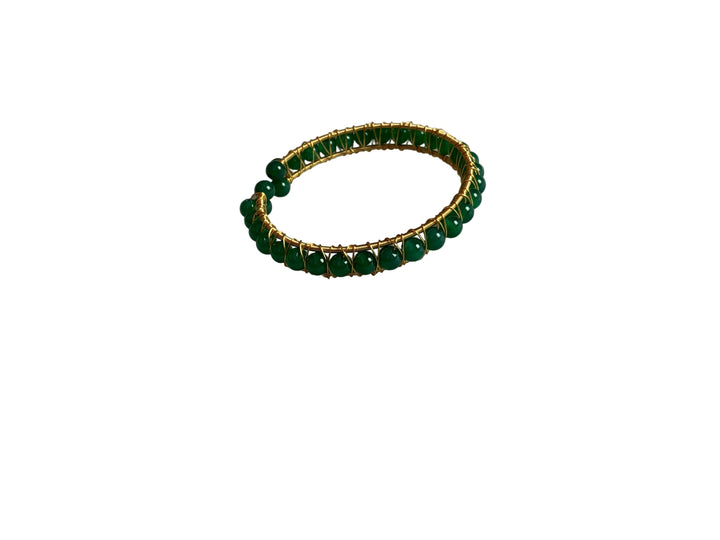
See it as
Quartz · Quartz (quartzite with mica inclusions)
Aventurine
Aventurina
- Palette
- Green Orange Brown Gray White
- Mined in
- India, Brazil, Chile, Spain, Russia, Austria, Tanzania
- Hardness
- Mohs 6.5–7.0 ?
- See-through
- translucent
- Known since
- Prehistoric
- Named for
- Italian a ventura, meaning by chance
- Also sold as
- aventurine quartz, aventurine quartzite, adventurine
- Intention
- Abundance New Beginnings
- Looking for
- Luck Prosperity Creativity Change and decisions
- Water
- Fine with water and mild soap
- Dye or finish
- Most aventurine is natural and untreated; the sparkle comes from the stone itself. Occasionally a strand is dyed, so ask when the color looks unusually vivid.
In our pieces · 1See the piece ↓
MIOTTI
In 17th-century Venice the Miotti family held an exclusive license from the Doge to make the copper-flecked glass that gave aventurine its name.
DEL-ROBA
In Persian, aventurine glass is called del-roba, which means charming.
A LEGEND
The tale of a Murano worker dropping copper filings into molten glass is a legend; no document older than the Miotti family's license backs it up.
What it is
A translucent to opaque quartz rock (quartzite) packed with tiny flat mica or iron-oxide flakes that give a soft glittering sheen called aventurescence. Green is the common bead color, with orange, brown, gray and blue-green also sold.
What gives it its color
The sparkle and color come from tiny mineral flakes inside the quartz: green from chromium-rich mica (fuchsite), and orange, brown and red from iron oxides (hematite and goethite).
Where it comes from
India is by far the largest source (around Mysore and Chennai), with Brazil second; Chile, Spain and Russia supply smaller amounts, mostly white, gray and orange material.
In history
Aventurine takes its name from a glass: Venetian glassmakers on Murano developed the copper-flecked 'aventurine' glass in the early 15th century, and it first appears in written records in 1626. The name later passed to the sparkling quartz that looks like it.
What's said about it
The name comes from the Italian a ventura, meaning by chance. It began with sparkling copper-flecked glass that Venetian glassmakers made by accident, and the name later passed to the similar-looking natural quartz.
People set a piece in each corner of a room to mark out a quiet space for meditation or yoga. It is also worn on the wrist or carried in a pocket.
How people wear or keep it: On the wrist, in a pocket, in each corner of a room, or on a desk.
In crystal practice
In the crystal tradition, aventurine is paired with the heart chakra, so practitioners rest it there during meditation or lie down with it in place for a few quiet minutes. Day to day, the same tradition suggests keeping it close: on the wrist, in a pocket, in each corner of a room. People reach for it when they want luck, prosperity, creativity, and many set an intention when they put it on. Most practitioners cleanse a new stone first (running water only if the stone can take it, otherwise smoke or moonlight) and set it aside now and then to rest.
These are beliefs people have held and still hold about the stone, reported as such. Nothing here is a promise or a medical claim. We sell stones as jewelry, not for these effects.
Associations
The chakra and star sign this stone is usually matched with. These are popular traditions, not facts about the stone.
ChakraHeart
ZodiacLibra
ElementAir
Also calledaventurine quartz, aventurine quartzite, adventurine
Care
- Quartz-based and fairly hard, so it resists everyday scratching; keep it apart from harder gems such as sapphire and diamond.
- Wipe with a soft damp cloth; mild soapy water is fine, then dry.
- Avoid ultrasonic cleaners and sudden hot-to-cold changes, which can strain the many tiny boundaries between grains.
- Strands with polished beads can chip on sharp knocks, so store them in a pouch rather than loose.
How to tell what you have
- Real aventurine is quartz packed with tiny flat flakes of mica or iron oxide that flash in the light. Goldstone is a man-made glass with a similar sparkle; look for glassy bubbles and a uniform, too-perfect glitter.
- Natural aventurine feels cool, is hard (about 6.5 to 7) and the flakes sit in a stone with a slightly uneven color.
What sets the price
Strands cost more when the sparkle is strong and the color is even; weak glitter, dyed quartz and glass goldstone sold under the name sit at the bottom. Rarer colors such as orange or blue cost more than common green, and so do larger, rounder, well-drilled beads.
Questions people ask at our table
What is aventurine?
Aventurine is a quartz rock whose glitter comes from tiny flat inclusions, usually green fuchsite mica or reddish iron-oxide flakes. It is a natural stone, though the name began with a Murano glass.
Where does the name aventurine come from?
It traces to the Italian a ventura, meaning by chance, from the accidental invention of sparkling glass at Murano in the 1700s. The glass was named first and the similar-looking stone took the name afterward.
Is aventurine the same as goldstone?
No. Goldstone is man-made glass in which copper crystals sparkle from various depths, while natural aventurine is quartz whose aligned mica flakes flash together at one angle. Tilt the piece under a single light to compare.
Does aventurine fade or need special care?
Natural aventurine holds its color well in normal wear. Keep it away from harsh chemicals and impacts, and wipe it clean with a soft cloth.
Our aventurine pieces

Stay in the loop
Sign up to hear about new product drops, upcoming events, and the latest from Peritik. No spam, just the good stuff.