
Brown aventurine is a trade name, and we have not confirmed what the supplier sold. It may be natural quartzite with iron-oxide flakes, or goldstone, a man-made glass with copper flecks. The lore below belongs to aventurine in general.
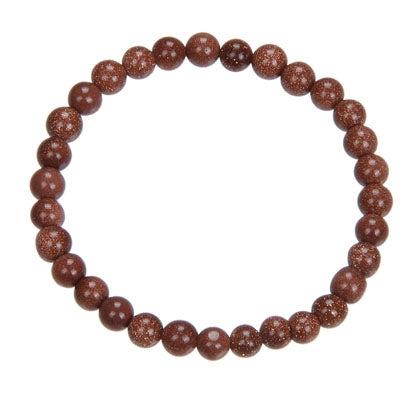
See it as
Quartz (aventurine quartzite); brown goldstone glass is the look-alike · Aventurine (quartzite)
Brown Aventurine
Aventurina marron
- Palette
- Brown Orange
- Mined in
- Chile, Spain, Russia
- Hardness
- Mohs 6.5–7.0 ?
- See-through
- translucent
- Known since
- 1626
- Named for
- Italian a ventura, meaning by chance
- Also sold as
- gold aventurine, brown goldstone, orange aventurine, gold-brown aventurine
- Intention
- Abundance Strength
- Looking for
- Luck Willpower Creativity Change and decisions
- Water
- Fine with water and mild soap
- Dye or finish
- Brown aventurine is natural quartz, usually sold with no change to the stone. Some brown glitter beads are man-made goldstone glass.
In our pieces · 1See the piece ↓
MURANO
In one story a Murano glassworker let copper filings fall into molten glass, and the sparkling result was named avventurino.
MONK'S GOLD
Goldstone glass also goes by the names monk's gold and monkstone.
6.5 ON MOHS
Aventurine quartzite rates around 6.5 on the Mohs scale, a little under single-crystal quartz at 7.
What it is
Warm brown to rusty orange beads with a fine glitter. Natural brown aventurine is quartz with iron-oxide flakes; man-made brown goldstone glass looks similar and is sometimes sold under the same name.
What gives it its color
Brown and orange aventurine get their color and their glitter from tiny flakes of iron minerals (hematite or goethite) inside the quartz; the man-made goldstone glass that sometimes passes for it gets its glitter from copper flecks.
Where it comes from
India is the biggest source of aventurine, with Brazil second; Chile, Spain and Russia supply creamy and orange material, and Austria and Tanzania smaller amounts.
In history
Brown aventurine beads are either a glittering quartzite or goldstone, a copper-flecked glass that the Miotti family of Venice made in the 1600s under an exclusive license from the Doge. A goldstone amulet from Persia dated to the 1100s-1200s is in the University of Pennsylvania's collection.
What's said about it
In crystal lore, aventurine is the stone people keep for luck and for openness to new things. The warm orange-brown kind is thought of as a stone for perseverance and steady resolve.
The name comes from the Italian a ventura, meaning by chance, after Venetian sparkling glass. People wear it on the wrist or carry it in a pocket.
How people wear or keep it: On the wrist, in a pocket, in each corner of a room, or on a desk.
In crystal practice
In the crystal tradition, brown aventurine is paired with the root and solar plexus chakras, so practitioners rest it there during meditation or lie down with it in place for a few quiet minutes. Day to day, the same tradition suggests keeping it close: on the wrist, in a pocket, in each corner of a room. People reach for it when they want luck, willpower, creativity, and many set an intention when they put it on. Most practitioners cleanse a new stone first (running water only if the stone can take it, otherwise smoke or moonlight) and set it aside now and then to rest.
These are beliefs people have held and still hold about the stone, reported as such. Nothing here is a promise or a medical claim. We sell stones as jewelry, not for these effects.
Associations
The chakra and star sign this stone is usually matched with. These are popular traditions, not facts about the stone.
ChakraRoot, Solar Plexus
ZodiacTaurus
Also calledgold aventurine, brown goldstone, orange aventurine
Care
- Wipe with a soft damp cloth and dry.
- Store apart from harder stones; quartz can still be scratched by harder gems.
- If the beads are glass, avoid hard knocks, which can chip glass.
- Avoid ultrasonic cleaners, steam and strong chemicals.
How to tell what you have
- Sold as brown aventurine, a bead may be natural quartz with iron flakes or goldstone, a glass with copper sparkles; it varies by lot.
- Natural flakes flash together at one angle; goldstone sparkle shows deep in the glass from many angles.
- Bubbles, or very coarse even flecks in a golden bead, point to goldstone.
What sets the price
The price follows what the strand actually is: natural aventurine (quartz with tiny iron-oxide flakes) or goldstone, a man-made glass; for natural beads it also depends on how rich and even the brown is, how much glitter shows, and the bead size, roundness and polish.
Rules and sourcing
Brown aventurine is natural quartz, but some brown glitter beads are man-made goldstone glass. Under the FTC jewelry guides a seller should say when a bead is glass.
Questions people ask at our table
What is brown aventurine?
It is the brown to orange color of aventurine, a quartzite colored by iron-oxide flakes. The name is also used loosely for brown goldstone, which is glass.
Is brown aventurine the same as goldstone?
Not always. Goldstone is man-made glass with copper crystals, with reddish brown the original and commonest color. Natural brown aventurine is quartz; its flakes flash together at one angle, where goldstone sparkles from various depths.
How can I tell glass from stone?
View the bead from all angles under one directional light. Glass goldstone sparkles from various depths and may flash from only two directions, while aligned flakes in natural aventurine flash together.
Does the color fade?
Natural iron-oxide color is stable in normal wear. Either material should be kept from harsh chemicals and hard knocks.
Our brown aventurine pieces

Stay in the loop
Sign up to hear about new product drops, upcoming events, and the latest from Peritik. No spam, just the good stuff.