
Much of the citrine on the market is heated amethyst, which gives a more vivid yellow. Natural citrine is paler and more lemon-colored. The lore below belongs to citrine as a name and a color.
See it as
silicate (tectosilicate), quartz group · quartz
Citrine
Citrino
- Palette
- Yellow Orange Brown
- Mined in
- Brazil, Bolivia, Uruguay, Madagascar, Zambia, Russia, Mexico, Democratic Republic of the Congo, Namibia, United States, Myanmar, Peru, South Africa
- Hardness
- Mohs 7.0 ?
- See-through
- transparent
- Known since
- Prehistoric
- Named for
- Latin citrus, the citron tree, via French citrin
- Also sold as
- yellow quartz, gold topaz (misnomer), Madeira topaz (misnomer), Brazilian topaz (misnomer), topaz quartz (misnomer), Madeira citrine, safranite
- Intention
- Abundance Strength
- Looking for
- Prosperity Communication Confidence and self-worth Creativity
- Water
- Fine with water and mild soap
- Dye or finish
- Most citrine on the market is amethyst that was heated to turn it yellow to orange; natural citrine is paler and rarer.
In our pieces · 2See the 2 pieces ↓
7 VS. 8
Citrine and all other quartz rate 7 on the Mohs scale, while topaz, the stone citrine was long sold as, rates 8.
MADEIRA
Deep orange citrine with red flashes carries the trade name Madeira, from a word for wood in Brazil.
14TH CENTURY
The word citrine first appeared in English in the 14th century.
What it is
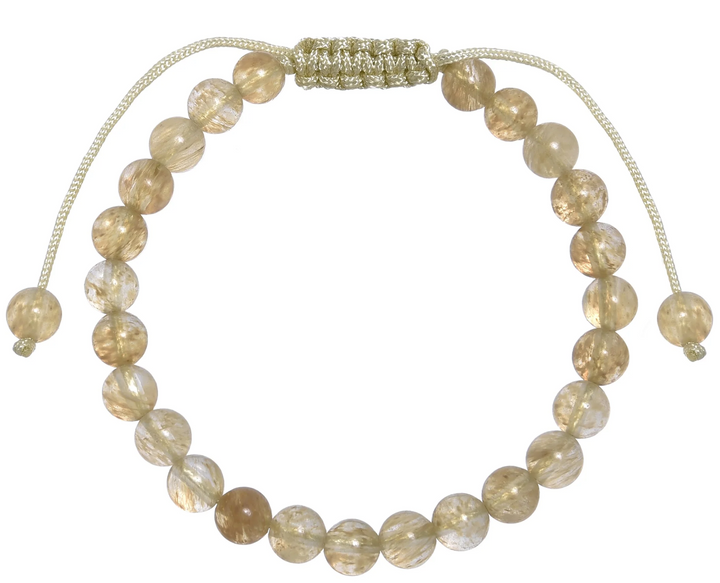
Natural citrine is usually a pale, slightly smoky lemon yellow, while the deep golden, orange and reddish 'Madeira' shades that dominate the market are almost always amethyst or smoky quartz whose color was changed by heating (GIA; International Gem Society). As a bead it is transparent to lightly veiled, with warm honey tones that often show subtle color zoning in heated material.
What gives it its color
Natural citrine gets its yellow from tiny color-producing flaws in the quartz and a trace of iron, while most citrine on the market is amethyst heated until the purple fades to yellow-orange (from iron oxides already in the stone).
Where it comes from
Most citrine, natural and heated amethyst, comes from Brazil (including Rio Grande do Sul); other sources are Russia, Madagascar, Uruguay, Zambia, Bolivia and the Democratic Republic of the Congo.
In history
Victorian jewelers set citrine into brooches and pendants, and an ornate brooch of this kind is dated to about the 1860s. Before modern mineralogy, citrine's golden color often led it to be sold as topaz.
What's said about it
In crystal lore, citrine is the merchant's stone. People keep it for prosperity, generosity and good business, and for a sunny, optimistic outlook. It's thought of as a stone for speaking clearly and for creative ideas, and it's the traditional pick for Gemini.
Yellow quartz from the Scottish Highlands was set in kilt pins and brooches for generations, and Art Deco jewelers loved big golden stones.
Shopkeepers keep a piece in the till or a wallet. Others wear it as a bracelet or ring, carry it in a pocket, or set it on a desk where they do creative work.
How people wear or keep it: On the wrist, in a wallet or cash box, on a desk, or in the prosperity corner of the home.
In crystal practice
In the crystal tradition, citrine is paired with the solar plexus chakra, so practitioners rest it there during meditation or lie down with it in place for a few quiet minutes. Day to day, the same tradition suggests keeping it close: on the wrist, in a wallet or cash box, on a desk. People reach for it when they want prosperity, communication, confidence and self-worth, and many set an intention when they put it on. Most practitioners cleanse a new stone first (running water only if the stone can take it, otherwise smoke or moonlight) and set it aside now and then to rest.
These are beliefs people have held and still hold about the stone, reported as such. Nothing here is a promise or a medical claim. We sell stones as jewelry, not for these effects.
Associations
The chakra and star sign this stone is usually matched with. These are popular traditions, not facts about the stone.
ChakraSolar Plexus
ZodiacAries, Gemini, Leo, Libra
BirthstoneNovember
Anniversary13th
ElementFire
Also calledyellow quartz, gold topaz (misnomer), Madeira topaz (misnomer)
Care
- Clean with warm water, mild soap and a soft brush; dry with a lint-free cloth.
- Keep it out of strong, prolonged sunlight: GIA notes that some citrine color can fade under intense light, and IGS notes heated stones may lose color with heat.
- Avoid steam cleaning, hot water and sudden temperature swings, which can crack quartz or shift its color.
- At Mohs 7 it resists everyday scratching, but store it apart from harder gems such as topaz or sapphire that can mark it.
- Keep it away from hydrofluoric acid, ammonium fluoride and strong alkaline cleaners (GIA).
How to tell what you have
- Natural citrine is usually a pale, slightly smoky lemon yellow; a deep orange-gold, sometimes with reddish tints, usually means heated amethyst.
- It is quartz, so it is hard (7) and feels cool; very cheap beads with intense color can be dyed or glass.
- Yellow topaz is a different stone that is often confused with it.
What sets the price
Strands cost more when the yellow to orange is richer and more even; pale or smoky yellow is lower, and most citrine is heated amethyst, which the trade accepts.
Rules and sourcing
Most citrine on the market is amethyst heated to turn it yellow to orange; natural citrine is paler and rarer. The FTC jewelry guides call for a seller to disclose heat that changes the color.
Questions people ask at our table
Is most citrine really just heated amethyst?
Yes. Natural citrine is uncommon, and both GIA and the International Gem Society state that the vast majority of citrine sold is amethyst or smoky quartz whose color was changed by heating. The change is permanent and does not affect durability, but a stone should be assumed heated unless a seller says otherwise.
How can I tell natural citrine from heated amethyst?
Natural citrine tends to be a paler, slightly smoky yellow, while heated amethyst gives the stronger orange, reddish and brownish tones often sold as Madeira citrine. Without lab testing the two are very hard to separate, which is why reputable sellers simply disclose that their citrine is heated.
What is the difference between citrine and topaz?
They are different minerals: citrine is quartz (Mohs 7) and topaz is a harder aluminium silicate (Mohs 8). Old trade names like 'gold topaz' or 'Madeira topaz' are misnomers for citrine, and both stones share November as a birthstone.
Will citrine fade in the sun?
It can. GIA notes that some citrine color fades with prolonged exposure to intense light, and the International Gem Society warns that heated stones may lose color when exposed to heat. Day-to-day wear is fine; just avoid leaving it on a sunny windowsill or near a heat source.
Where is citrine mined?
Brazil supplies most of the world's citrine and nearly all of the amethyst that is heated to make it. Natural, unheated citrine also comes from Bolivia's Anahi mine, Madagascar, Zambia, Russia, Uruguay and Mexico.


Stay in the loop
Sign up to hear about new product drops, upcoming events, and the latest from Peritik. No spam, just the good stuff.