
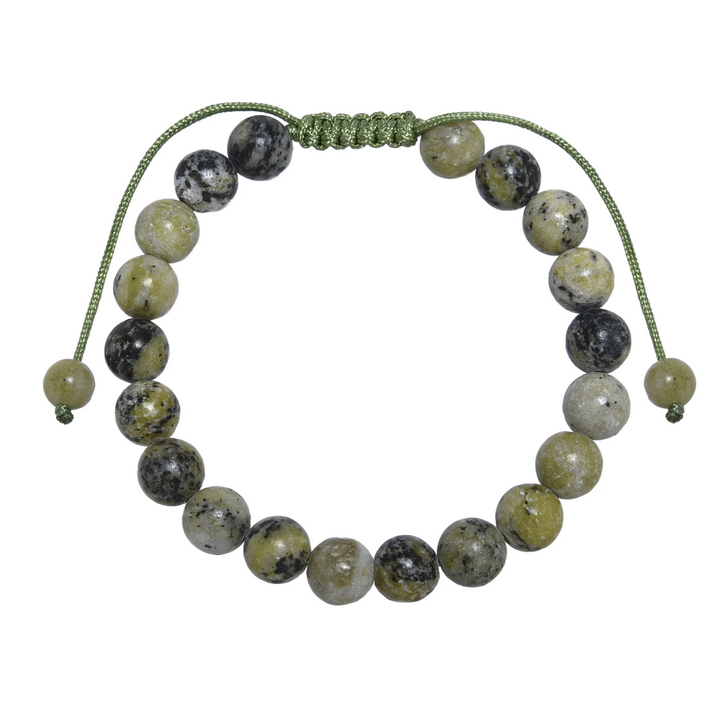
Yellow turquoise is not turquoise. It is a trade name for a chartreuse-yellow stone with dark webbing, reported to be serpentine. What the stone is has not been settled.
See it as
Serpentine (rock with quartz and hematite), sold as 'turquoise'
Yellow Turquoise
Turquesa amarilla
- Palette
- Yellow Brown Black
- Mined in
- Afghanistan, China, Egypt, Iran, Mexico
- Hardness
- Mohs 2.5–6.0 ?
- See-through
- opaque
- Known since
- 1840
- Named for
- turquoise, whose name the yellow stone borrows
- Also sold as
- Yellow serpentine, yellow turquoise serpentine
- Intention
- Abundance
- Looking for
- Prosperity Luck Goals and motivation
- Water
- Keep it dry; wipe with a soft cloth
- Dye or finish
- Yellow turquoise is a trade name, not turquoise. Beads sold under it are often dyed and the color can differ from lot to lot; some lots are listed natural.
In our pieces · 1See the piece ↓
1965
California named serpentine its official State Rock in 1965.
13% WATER
Antigorite, a main serpentine mineral, is about 13 percent water by weight.
What it is
Chartreuse to yellow-green stone with dark webbing. 'Yellow turquoise' is a trade name only: the beads are serpentine rock, often with quartz and hematite, and some are dyed. It is not turquoise.
What gives it its color
Most beads sold as yellow turquoise are not turquoise but serpentine or jasper with black hematite webbing, and the yellow comes from dye.
In history
'Yellow turquoise' is a trade name; the stone is a serpentine rock, and serpentine has long been carved. Roman builders quarried a green serpentine breccia at Casambala in Greece, called verd antique, and it went into Hagia Sophia in the 500s. In India, cups and dagger handles were cut from green serpentine and sold as 'false jade', and the Maori of New Zealand carved their own serpentine, tangiwai.
What's said about it
It has no lore of its own. The name borrows from turquoise, which in crystal lore is the stone for protection, luck and success, and that is the association shoppers usually bring to it.
It is fairly soft, so it suits a quiet day more than rough work. Many people wear it on the wrist or keep one in a wallet.
How people wear or keep it: On the wrist, in a wallet or cash box, or in a pocket.
In crystal practice
Day to day, the same tradition suggests keeping it close: on the wrist, in a wallet or cash box, in a pocket. People reach for it when they want prosperity, luck, goals and motivation, and many set an intention when they put it on. Most practitioners cleanse a new stone first (running water only if the stone can take it, otherwise smoke or moonlight) and set it aside now and then to rest.
These are beliefs people have held and still hold about the stone, reported as such. Nothing here is a promise or a medical claim. We sell stones as jewelry, not for these effects.
Associations
Also calledYellow serpentine, yellow turquoise serpentine
Care
- Soft in places (about 2.5 to 6 on the Mohs scale, depending on the mix), so avoid knocks and keep it apart from harder stones.
- Keep it away from solvents, perfume and long soaking, since some lots are dyed.
- Wipe with a soft dry cloth.
- Keep out of long direct sun in case the color is dyed.
How to tell what you have
- The name can cover yellow-green serpentine, jasper or dyed howlite depending on the lot, so check what the seller says it is. Look for dye pooling at the drill hole and cracks, and rub a hidden spot with a damp cloth.
- Serpentine is soft (Mohs about 2.5 to 5) and feels waxy; glass shows round bubbles.
What sets the price
Price follows what the beads actually are in that lot (usually serpentine, sometimes jasper or dyed howlite), whether they are natural or dyed, how even the moss-to-lime green or yellow is, and the usual bead factors of size and polish.
Rules and sourcing
Yellow turquoise is a trade name, not turquoise; the beads are serpentine and are often dyed. A seller should say what the bead actually is under the FTC jewelry guides and disclose dye. Beads sold as yellow turquoise are serpentine, a group that includes chrysotile, an asbestos mineral under US law, though the platy serpentine usually cut into beads is not fibrous. Finished beads are fine to wear, but do not grind, sand, drill or cut them without dust protection.
Questions people ask at our table
Is yellow turquoise real turquoise?
No. It is a trade name; a forum poster on a jewelry site identifies it as serpentine that looks more chartreuse than yellow, with black webbing. Turquoise that has yellowed is altered real turquoise, which is a different thing.
What is it actually made of?
The identity is not settled in the sources we could read: one source says serpentine, and the rock can vary by supplier. The owner should confirm what the supplier sold.
Is it dyed?
We could not confirm this from a source we read, so we do not state it either way.
Where does it come from?
We could not confirm a source locality for this trade name.
Our yellow turquoise pieces

Stay in the loop
Sign up to hear about new product drops, upcoming events, and the latest from Peritik. No spam, just the good stuff.