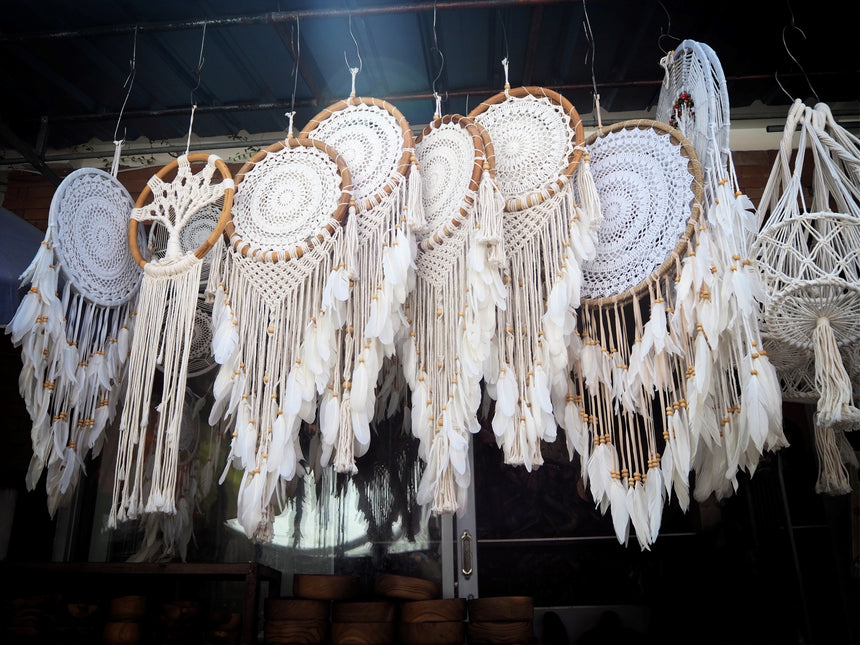
Dreamcatchers 101
Where do dreamcatchers come from?

Dreamcatchers originate from Native American tribes, particularly the Sioux. An old Sioux master, Iktomi, created a hoop from a willow branch and wove a web using horsehair, feathers, seeds, and beads. As he wove, he explained that the web symbolizes life's circles, capturing good ideas and dreams while letting bad ones pass through the center hole.
What is their purpose?

Traditionally, each dreamcatcher should be personalized to filter negativity and enhance its protective power. Without activation, it remains a decorative object. Regular "energetic cleaning" is important to maintain its protective properties.
What should be done?

To clean a dreamcatcher, perform a sage ritual. Light sage, let it burn for a minute, then extinguish the flame. Purify the amulet with the smoke, moving clockwise around the room. Hold the dreamcatcher at eye level and ask it to act as a protector. Thank it for its service.
Frequently asked
What is a dreamcatcher?
A dreamcatcher is a handmade hoop woven with a loose web and hung with beads and feathers. It comes from Native American tradition, where it was placed above where someone sleeps. Today many people keep one as a meaningful piece of decor.
Where should I hang a dreamcatcher?
Most people hang a dreamcatcher above or near a bed, by a window, or anywhere it can catch a little light and move with the air. There is no strict rule; pick a spot where you will see it and enjoy it.
How do I care for a dreamcatcher?
Keep it out of direct moisture, dust the web and feathers gently now and then, and reshape the feathers by hand if they flatten. Handled with a little care, a woven dreamcatcher lasts for years.
Stay in the loop
Sign up to hear about new product drops, upcoming events, and the latest from Peritik. No spam, just the good stuff.